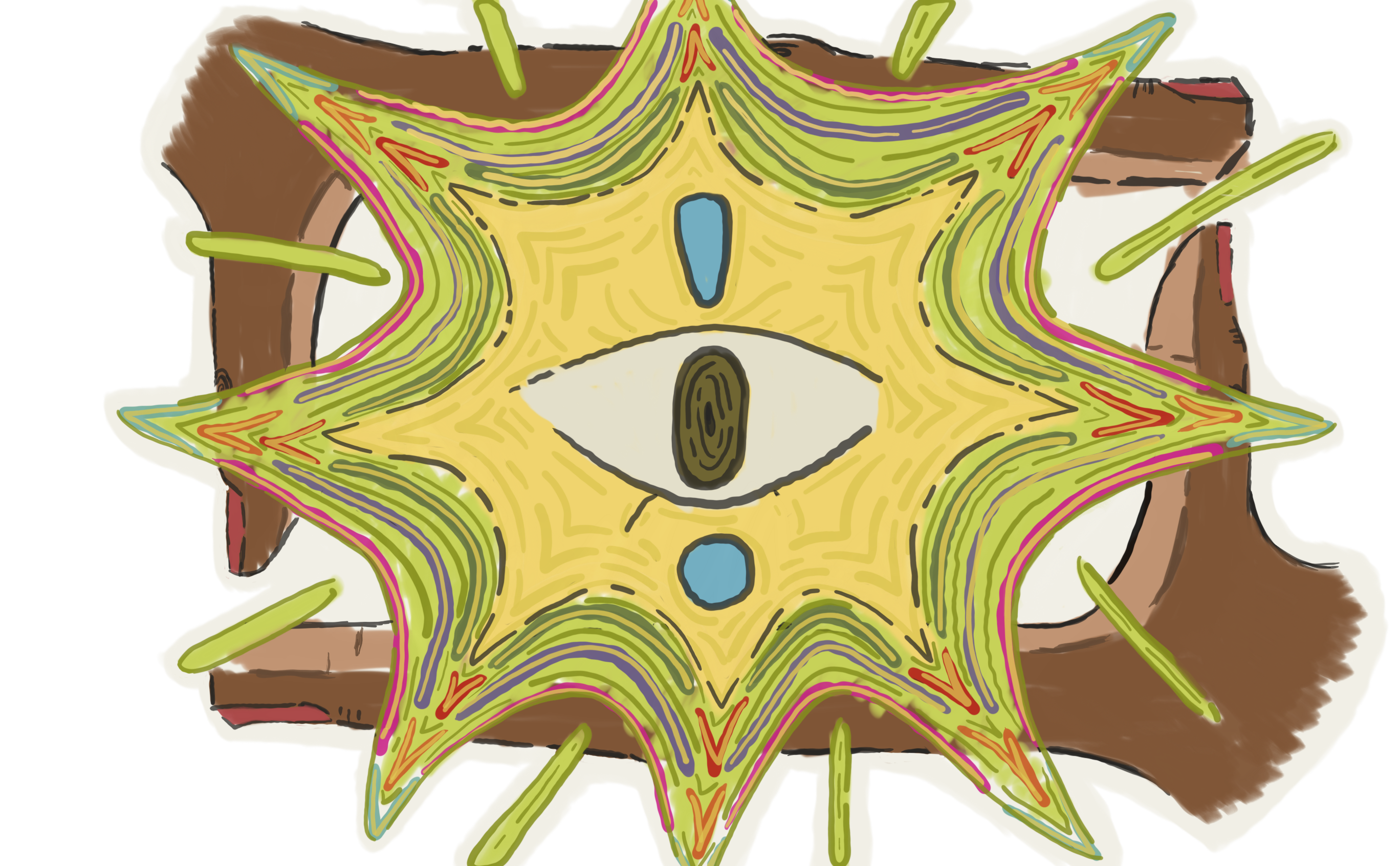
We live in a constant cycle of indecision. Since our world has begun to fracture, we have found it difficult to discern whether our view is right or wrong. Whether we are good or bad people. Even if we are classified as beautiful or ugly. The truth gets more and more difficult to find, leading us on a never-ending search for meaning and understanding in the actions we take. Often, this leads people to believe that they can only pick one thing to be represented as. With the introduction of social media only supporting this assumption. Allowing people to judge and critique the way people and environments change and grow. This routine is difficult to escape. It has become innate to our being; something we expect from our world. Through my growing understanding of nature and the state of the world, I have realized that we are stuck in a cycle of survival.
I began working at the public library in 2023. I wasn’t sure what to expect when I started. I just knew it would be a good place to help my community. I knew I would be helping the houseless population. I knew that there were bound to be emergencies and crash outs from patrons that I couldn’t control. I knew, and looked forward to, the tedious task of shelving, shelf-reading, and organizing. What I didn’t expect to find in my employment was patience. How much waiting was involved in helping people. From my three years at my public library, I began to see a reality completely different from the one I crafted before. Amanda Oliver notes this in her book Overdue: Reckoning with the Public Library, “The American public library is a case study for American society: what we value and uphold, what we resist and weave stories around, whom we give certain access to and whom we deny it.” (Page number). The Public Library is a lesson in reality, what it honestly looks like, and how we choose to interact with it. For me, this realization brought about understanding and appreciation. From the small kindness I can show to patrons, to the soft reactions of patrons I cannot help. To the trees moving outside the window while I sat still, waiting. Noticing the drastic difference between the lives of people and the nature that watches us. Many things are expected of humans that do not burden the nature we gaze upon from the inside. But as our world quickly grows, nature too must adapt just as we do to combat the development, we aren’t always aware of.
Technology has taken over our world. You need a computer to find jobs, apply for housing, upload things for court, and to organize money and taxes. I have watched many patrons struggle to get videos off flash drives, and many others feel unequipped to work on a computer in general. Our society has become extremely reliant on technology to fulfill our tedious tasks and our need for enjoyment. In a blink, there grew a rift between what life looked like in reality versus how it looked online. With more people finding comfort and aspiration behind a screen rather than whoever they are forced to interact with in public. Noting that, “With the internet always available in the devices glued to our hands, it is not just our curiosity that has become muted but also our time.” (Oliver, 162) The distinct difference between these two realities has caused people to disconnect from their surroundings. Time always seems to escape us when using technology, heightening the fact that there are many things to do and achieve. This only upholds the feeling that we are running out of time to do the things we have always wanted to do. Creating this pressure and desire to succeed like the people we view online who we have begun to think exist. This reliance that has developed for computers has completely changed the way people interact and view the living things around them.
The most notable way this shows up is through children. Parents and teachers alike have turned to tech to capture the attention of children. Forcing these kids to grow up split between these two different realties, preferring the one online over the physical. In The Secret Therapy of Trees, Mencagil and Nieri state that as children, “we don’t view nature as other but rather a part of ourselves.” (17) This is no less true for people who grew up before the internet developed, but for children of the 2000’s the line between technology and nature grew too quickly for us to notice. Additionally, children of the 2010’s are coming into an already deeply saturated and established online network that seems far more interesting than the simplicity of going outside. This shift and development have completely changed the view children have of the world around them. Subsequently, they are being taught to care less about the person they are in the world and put more energy and time into who they can imagine themselves to be online. Letting their innate sense of self only develops through survival, and not interest.
We are all built to survive. This is stated plainly in The Secret Therapy of Trees, “All animals, even plants, are endowed with the ability to react and adapt to possibly dangerous stimuli in the environment.” (34) This can be seen in the way trees still fight each other for sunlight. Or in the way that birds, squirrels, and other animals have had to learn to adapt to cars, trash, and shifting landscapes. Even the way humans take on different personalities to get through a specific time or event in their life. Though our way of survival looks completely different to other living things, humans will always have the skill to adapt to their surroundings. With the fracture between reality and technology, people easily lose their momentum, forever trapped in the cycle of surviving in an overdeveloping world. This flaw sets us apart from every other living thing. Humans have the ability to consciously choose how we react, attach, or even hear the people and the world around us. Our ability to live depends on what we choose to believe and what we assume ourselves to be capable of. From this, the question that arises is: Am I capable of more than just survival? If we are likely to survive what life throws our way, to live and expand is a choice we ourselves have to make. Choosing to step outside of the predetermined cycle is a skill we must take time to build.
No matter what humans achieve or learn, it will all be done under the guise of time running out. This is simply due to the fact that everything we are made to do is considered important. School, jobs, money, the news, and even we are supposed to be the most important things to life. This stress of importance and constant division of time is a main factor in the division that our realities split into. In this suffocating cycle, “…It seems our bodies might be spending half the day cyclically activating and deactivating stress” (Mencagli, Nieri, 37). And this is where we stay, trapped between stress and indifference; never able to fully relax. Though, even the act of relaxing is a choice we have to make. Humans must choose to stand still and take in their surroundings. We must choose to understand our reality as it exists. Especially, “Since Nature doesn’t bother to send us messages and we are the ones to interpret it and pull our perceivable meanings, it follows that at a given moment anyone could theoretically arrive at their own personal message of well-being.” (Mencagli, Nieri, 50) Because of this people will have to take their own time to live and accept the true reality we are living in. Ultimately, it is truly up to us to choose to listen and retain the things we learn from our surroundings. Which makes the process of escaping the cycle no easier. When the world never stops spinning, growing, and changing, how do we find the time to stand still?
We treat ourselves how we treat the Earth. In riddling this world in trash, we find it easy to fill our bodies and minds with the same. Even as the climate of this planet changes, we find ourselves dependent on the things that pollute our air and contaminate our water. Though we are vastly different, nature, at its core, is a reflection of humanity. Showcasing our past and what we hope for the future. Often, it is forgotten that this planet is alive and communicates and connects without our immediate knowledge. The Earth is not an object we can discard, but a living thing we must rely on to survive. These fractions our society has made have led many people to devalue the effect the environment has on us. And in turn devalue themselves and what they believe they are capable of changing and creating in their real life. Even though we choose and decide what we believe and hope for, it is another choice to act on those things and apply them to our lives. That choice to shift from thought to action is what makes the difference between living and surviving.
Work Cited
Mencagli, Marco, and Marco Nieri. The Secret Therapy of Trees: Harness the Healing Energy of Forest Bathing and Natural Landscapes. Random House Audio, 2019.
Oliver, Amanda. Overdue: Reckoning with the Public Library: Reckoning with the Public Library. Chicago Review Press, 2024.


Leave a Reply